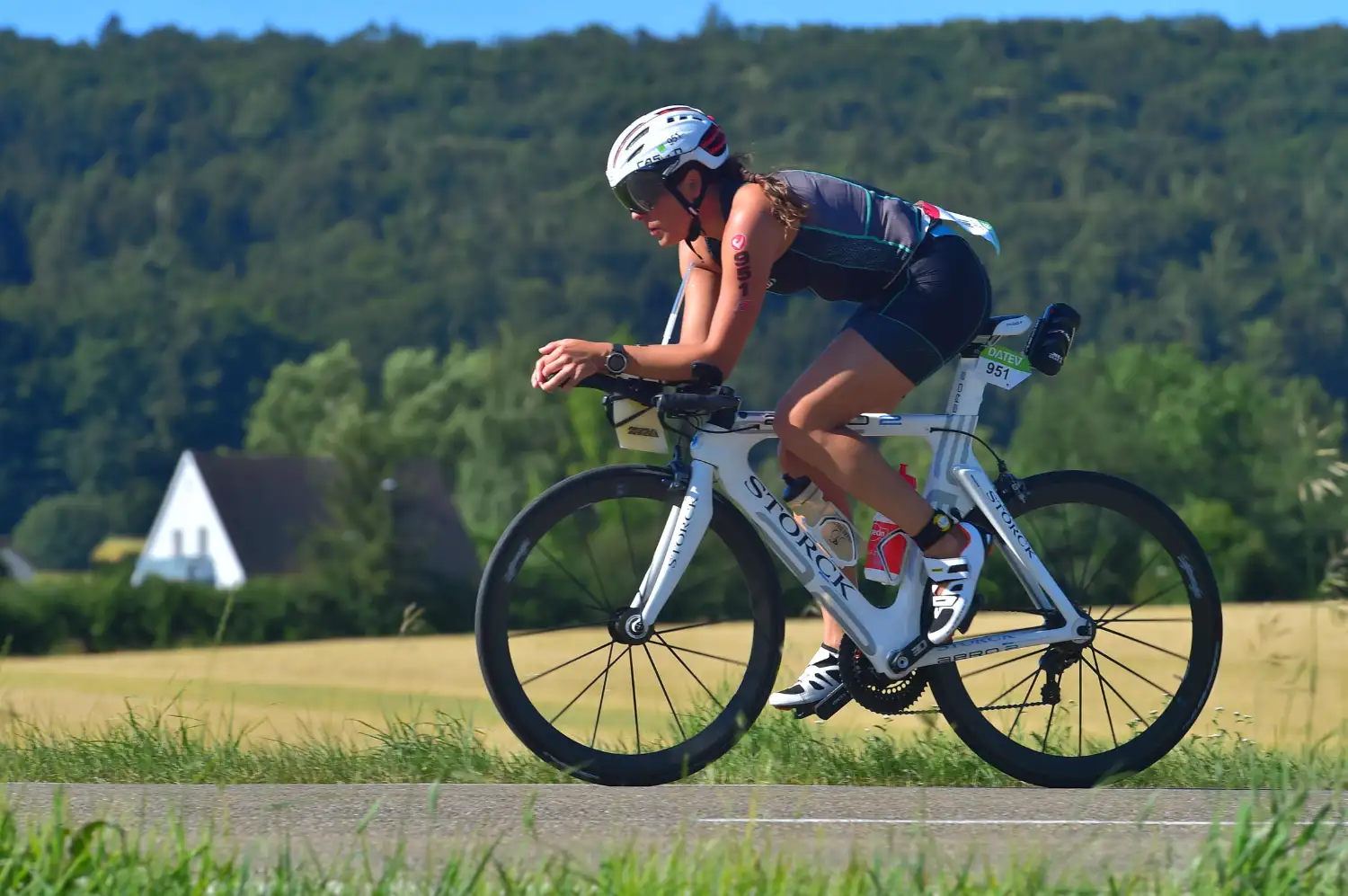
Triathlon · Running · Cycling · Ultra
Training that fits your life.
One-to-one endurance coaching with Anna Wächtershäuser – three-time competitor at the Ironman World Championship in Hawaii. You train with structure. I take care of the planning.
- 21Years racing triathlon
- 20Ironman full distances
- 20Ironman 70.3 middle distances
- 3×Ironman World Championship Hawaii
Sound familiar?
A work trip, a deadline, the family – and the plan falls apart.
Off-the-shelf plans don't know your calendar. I lived that for years: plenty of training, very little progress. Things only started to add up once a coach took the planning off my hands.
That is exactly what I now do for the athletes I work with.
The usual three
-
Making up for missed sessions
You fully intend to train, then something comes up – and the session gets tacked onto the next day. That costs you recovery and the training stimulus is lost. A short message is enough; I'll adjust the plan.
-
Strength work, mobility and rest days
The first things to go when time gets tight – and exactly what keeps you injury-free through the season. When a week gets crowded, I decide which sessions move and which get rebuilt. What gets dropped is what costs you least, not whatever happens to be in the way.
-
Racing in training
Easy sessions should be easy. Hard sessions hard. Train in the middle all the time and you collect fatigue instead of form.
From practice
Where are you right now?
Two paths I see again and again. Pick the one that's closer to yours.
Choose what applies to you
From one local 10K to a first Olympic distance.
The sentence I hear most often in a first call: “I've wanted to do this for so long, but open water makes me nervous.” That's where we start.
Starting point
- Athlete
- Sandra, 38, marketing, one child
- Goal
- First Olympic distance: 1.5 km, 40 km, 10 km
- Background
- One 10K road race, then running on and off
- Swimming
- Last time was school PE, uneasy in open water
- Time available
- 5–7 hours a week
- Before
- Three years of intending to, never signed up
- Timeframe
- January to July, 7 months
-
1. Start with what makes you uneasy
Into the water twice a week, but short: 30 minutes of technique instead of piling up laps. After ten weeks she could swim 1,500 metres nonstop – and swimming was no longer the discipline she avoided.
-
2. Run slower so more fits in
Every run had been at a brisk pace – that doesn't work alongside cycling and swimming. The new easy runs felt almost too easy at first.
-
3. On the bike, confidence before speed
Drinking while riding, cornering, shifting on a climb. Only then the build towards 40 kilometres at race pace – nobody trains happily on a bike they don't feel safe on.
-
4. Practising open water instead of enduring it
Regular lake sessions from May: sighting, starting in a pack, wetsuit. On race day none of it was new.
-
5. Sign up before you feel ready
The entry was booked in February, not “when it fits”. A date in the calendar did more than any training plan.
Swim nonstop
150 m → 1,800 m
in open water, without stopping
10K time
63:40 → 56:40
7 minutes faster
First Olympic distance
never raced → 3:04:12
finished in July
For three years I said I'd do it one day. After the first conversation there was a date in my calendar, and suddenly it wasn't one day any more.
From 5:38 to 5:03 – on less training time.
Not a pro, no training camp. A full-time job, a family and seven to nine hours a week. What mattered wasn't more training, but different training.
Starting point
- Athlete
- Michael, 41, project manager, two children
- Discipline
- Triathlon middle distance (70.3)
- Background
- Three middle distances, most recently 5:38
- Time available
- 7–9 hours a week, irregular
- Before
- A free 12-week plan, lots of medium pace, no strength work
- Goal
- Under 5:15 at his target race
- Timeframe
- October to July, 9 months
-
1. Measure first, then plan
A lactate test on the bike and running. The result: his “easy” sessions had all been above his aerobic threshold. The new zones were considerably slower than he expected.
-
2. Polarise instead of sitting in the middle
Around 80 per cent of weekly hours deliberately in the easy range, plus one hard session a week with a clear purpose. Weekly volume actually went down slightly.
-
3. Strength work as a fixture
Two 25-minute strength and stability sessions a week – fixed in the plan, not a bonus. After three months the back pain on long rides was gone.
-
4. A plan that breathes
Over nine months 21 sessions were missed – work trips, a cold, a child's birthday. Nothing was made up; each week was simply rebuilt instead.
-
5. Fuelling practised like technique
Counting carbohydrates in training showed that instead of the planned 60 g he was actually taking in 35 g per hour. Built up step by step to 80 g – and the fade in the last third of the run never came.
Target race 70.3
5:38 → 5:03
35 minutes faster
Threshold power on the bike
214 W → 248 W
+16 per cent
Training time per week
8.4 h → 7.9 h
half an hour less
The hardest part was accepting how slow easy really is. The best part was being faster after nine months while putting in less time.
How we work together
From the first call to your target race.
We start with a conversation: where you are, what you want to achieve, how much time you really have. Your plan grows out of that – and then it runs in three loops.
Planning & analysis
Your training plan on TrainingPeaks, adjusted to you every week and, if you book it, complemented by nutrition guidance around your training. Regular performance tests in your disciplines provide the physiological numbers.
Feedback both ways
You get regular feedback on sessions, fitness and progress. And I need yours – on goals, availability and how training actually feels. That's the only way the plan gets better.
Active support
Questions, requests, or something got in the way? You can reach me on TrainingPeaks, WhatsApp or by video call, and I'll adapt the plan to your situation quickly – wherever you are, which is how most of my athletes are coached.
Before all that: the no-obligation first call. Free, and you commit to nothing. We go through your current fitness, your goals and your circumstances – time available, the training load you want, duration and content. Afterwards you'll know whether we're a good fit.
Where you train
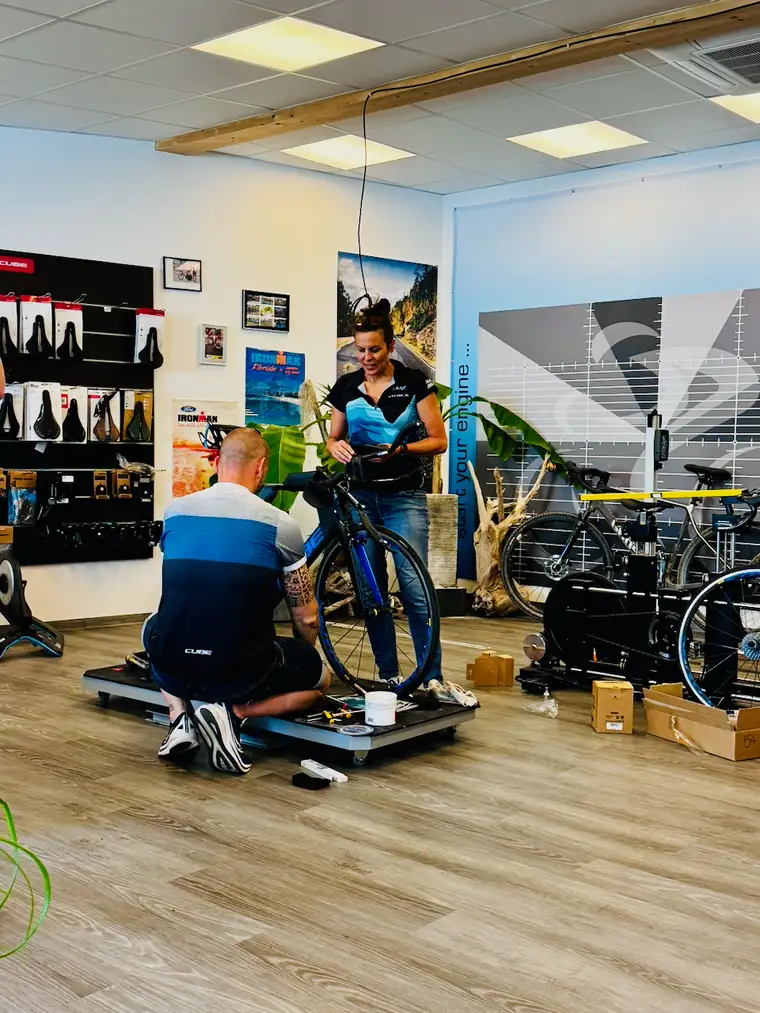
Most of the athletes I coach work with me remotely.
That's routine here, not an exception. Plan, feedback and check-ins run through TrainingPeaks, WhatsApp and video calls – whether you live in the Taunus hills or at the other end of the country makes no difference to the coaching.
- Coaching anywhere in Germany and beyondA weekly plan, feedback on every session, a direct line when you have questions.
- Performance testing close to youIf the journey is too far, I arrange a test at a clinic in your region, receive the raw data and analyse it. My fee doesn't apply then – you only pay the clinic.
- In person in the Frankfurt areaLactate testing, one-to-one sessions, swim and run analysis, sports psychology coaching.
- Once a year, togetherAn optional training camp as part of the programme.
About me
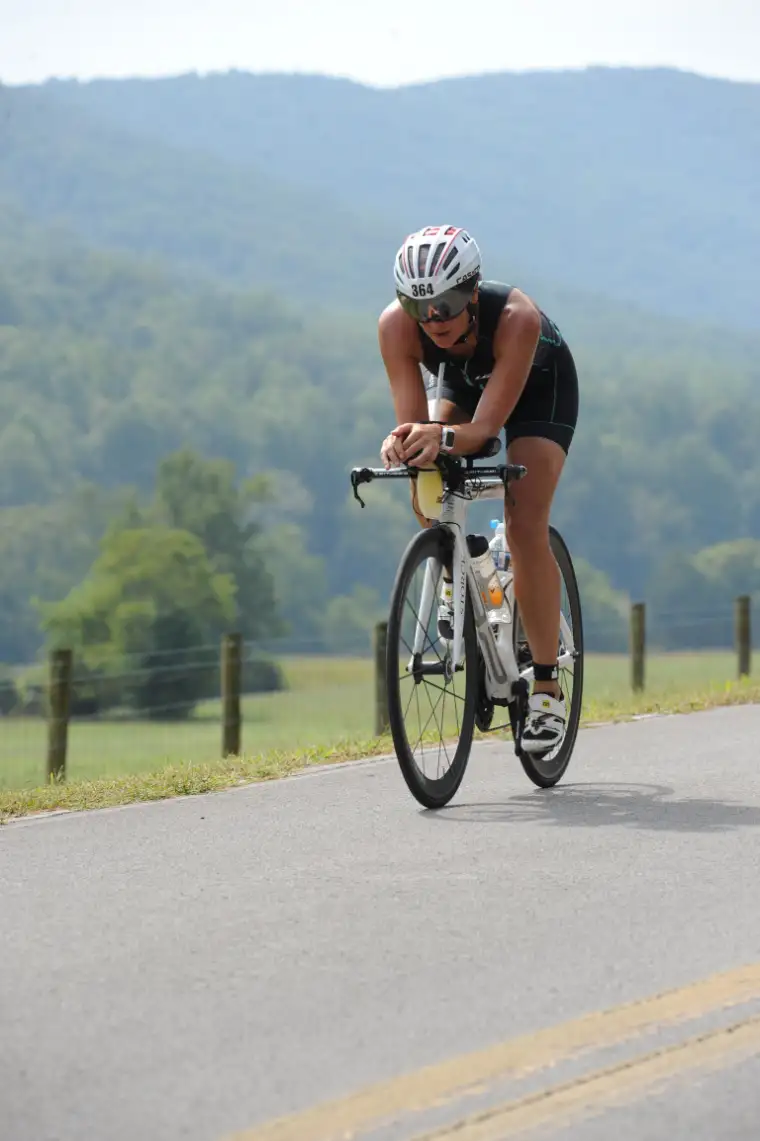
Athlete first, coach second.
I'm an outdoor person through and through – on the bike, on foot, on skis or in the water. I discovered long distances during stressful stretches at work, when I needed to clear my head. Combined with the challenge of putting several disciplines together, that led me to triathlon – and several times all the way to Hawaii.
Why coaching?
I know work trips, office stress and appointments that wreck a training week. Standard plans and spontaneous runs got me nowhere. It was my own coach, taking the planning and structure off my hands, who got me to my goals. After many years in business I turned that passion into my profession and qualified as an endurance coach, nutrition coach and mental coach.
How I coach
Your training should be as individual as you are: your goals, your fitness, your time. Stress-free for you – I handle the planning, and when something gets in the way we adapt. Three things matter to me: individuality, variety, motivation.

21 years of experience
Train with someone who has ridden the course herself.
Twenty Ironman full distances, twenty middle distances, three starts at the World Championship in Hawaii, plus ultracycling events. You benefit not only from the theory but from what actually works on race day – from pacing strategy to fuelling.
Services & pricing
One coaching plan. Everything included.
No tiers, no upselling – your training is planned individually anyway. Anything else you add when you need it.
Monthly
One-to-one training support
Your training plan, adapted to you and your goals every week – with feedback and a direct line to me.
from €135 per month
Cancel monthly
- Detailed intake and goal setting, including season and race planning
- Weekly, varied training plans on TrainingPeaks, matched to the time you have
- Individual adjustment whenever something gets in the way
- Regular performance tests to track your progress
- Regular feedback, analysis and communication
- Planning your race strategy
- TrainingPeaks Premium account included
Training with your partner for the same target race? Ask about the partner rate.
Book individually
Also without ongoing coaching – as an addition or simply to try it out.
Once a year
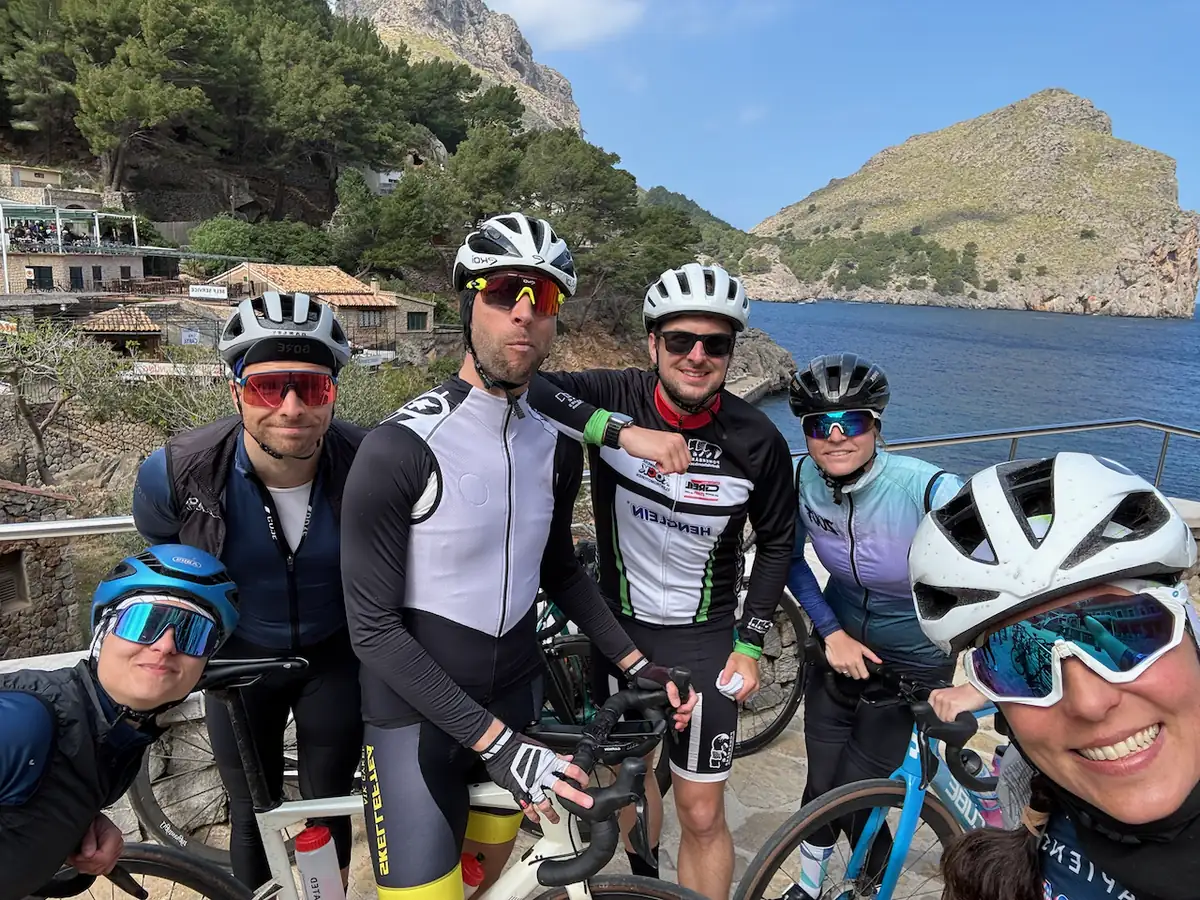
Training camp – optional, but highly recommended.
Once a year we head out together: a few days where training is the main thing in the day rather than something squeezed between two appointments. If you usually train alone, this is where you notice what a group does for you.
- Open to everyone in coaching, whatever their level
- Taking part is optional and billed separately
- A good chance to meet in person – especially for everyone coached remotely
I announce the dates and destination well in advance. Just ask me about it in our first call.
In their words
What the athletes I coach say.
With Anna’s support I took 35 minutes off my middle-distance personal best within a few months. I felt I had been training in a structured way before, but the real progress only came through Anna, her advice and training that actually worked. I have a demanding job and I love being able to hand the planning over to her.
 Franzi
Triathlon, Frankfurt
I met Anna two years ago and prepared for a 300 km race with her. Since then she has guided me towards bigger and bigger goals. Her grasp of stimulus, recovery, nutrition and motivation helped me reach targets I once thought impossible. Under her guidance I have performed better than I did ten years ago.
 Christian
Ultracycling, Bottrop
Anna built a plan that suited my age and my weaknesses, gave precise feedback and showed me how race nutrition really works. Counting carbohydrates in training revealed I had simply been eating too little before races. The result was a significant personal best.
 John
Marathon, San Francisco
Anna is a wonderful coach who shows me that triathlon isn’t only swimming, cycling and running, but passion, joy and a lot of fun in training. Thank you for the motivation and all the unforgettable moments!
 Thorsten
Triathlon, Bruchsal
Common questions
Before you write.
Am I even good enough for coaching?
This question comes up almost every time – and the answer is yes. Coaching isn't a certificate of fitness, it's a planning question. I coach beginners before their first short-distance race just as I coach athletes aiming for Hawaii. The plan follows your level, not the other way round.
How much time do I need per week?
From around five hours a week you can train sensibly for a short or middle distance, and for a marathon even less works. What matters isn't the total but that sessions are plannable and hit the right intensities.
Tell me honestly in our first call what is realistic – not what you'd like it to be. A plan that doesn't work helps nobody.
How long am I committed for, and how do I cancel?
Coaching runs monthly and can be cancelled at the end of any month. There is no minimum term – though three to four months make sense, because adaptations in endurance sport take time.
I already have a coach. How does switching work?
Easily. Bring your training data from recent months – through TrainingPeaks, Garmin Connect or Strava. I look at what has been working and build on it instead of starting from scratch. Switching mid-season is no problem, as long as you don't have a race in the next two weeks.
Do I need a power meter or a particular watch?
No. A watch with heart rate is enough to start. A power meter on the bike makes the steering more precise but isn't a requirement – plenty of my athletes ride on heart rate and feel. What matters is that your data reaches TrainingPeaks, and that works with practically any common watch.
Does TrainingPeaks cost extra?
No. The Premium account is included for as long as we work together.
I don't live nearby. Does that still work?
Yes – most of the athletes I coach work with me remotely. Plan, feedback and check-ins run through TrainingPeaks, WhatsApp and video calls. That's well-practised routine here, not an exception.
Does the performance test have to take place with you?
No. If the journey is too far, I arrange a test at a clinic near you. I then receive all the raw data, analyse it and go through it with you – my fee doesn't apply, you only pay the clinic.
Is there a training camp?
Yes, once a year. Taking part is optional and billed separately, and it's open to everyone in coaching. If you're usually coached remotely, it's a good chance to meet in person and train for a few days in a row.
And the in-person sessions?
One-to-one training, swim and run analysis and sports psychology coaching take place in Oberursel and the greater Frankfurt area. Mental coaching also works by video call if you prefer.
Do you coach runners or cyclists as well?
Yes. Triathlon is my focus, but marathon preparation and cycling right through to ultracycling events are just as much part of it. For the plan it makes no difference whether it covers one, two or three disciplines.
How quickly do you reply?
Usually the same day, at the latest the next. If something comes up at short notice and the plan needs changing, that's normally sorted on WhatsApp within a few hours.
Get in touch
Let's talk – free and without obligation.
Tell me briefly where you are and what you have in mind. I'll get back to you and we'll arrange a first call.
Currently full – places opening up for the winter season
So that every athlete gets the attention an individual plan requires, the number of coaching places I take on is limited. At the moment they are all taken. Places will open up for the winter season – do get in touch now and we'll talk about your goal so I can hold one for you.
Phone & WhatsApp
+49 175 412 69 36In person
Most of the athletes I coach work with me remotely, across Germany and beyond.
Testing and in-person sessions: 61440 Oberursel im Taunus and the greater Frankfurt area.
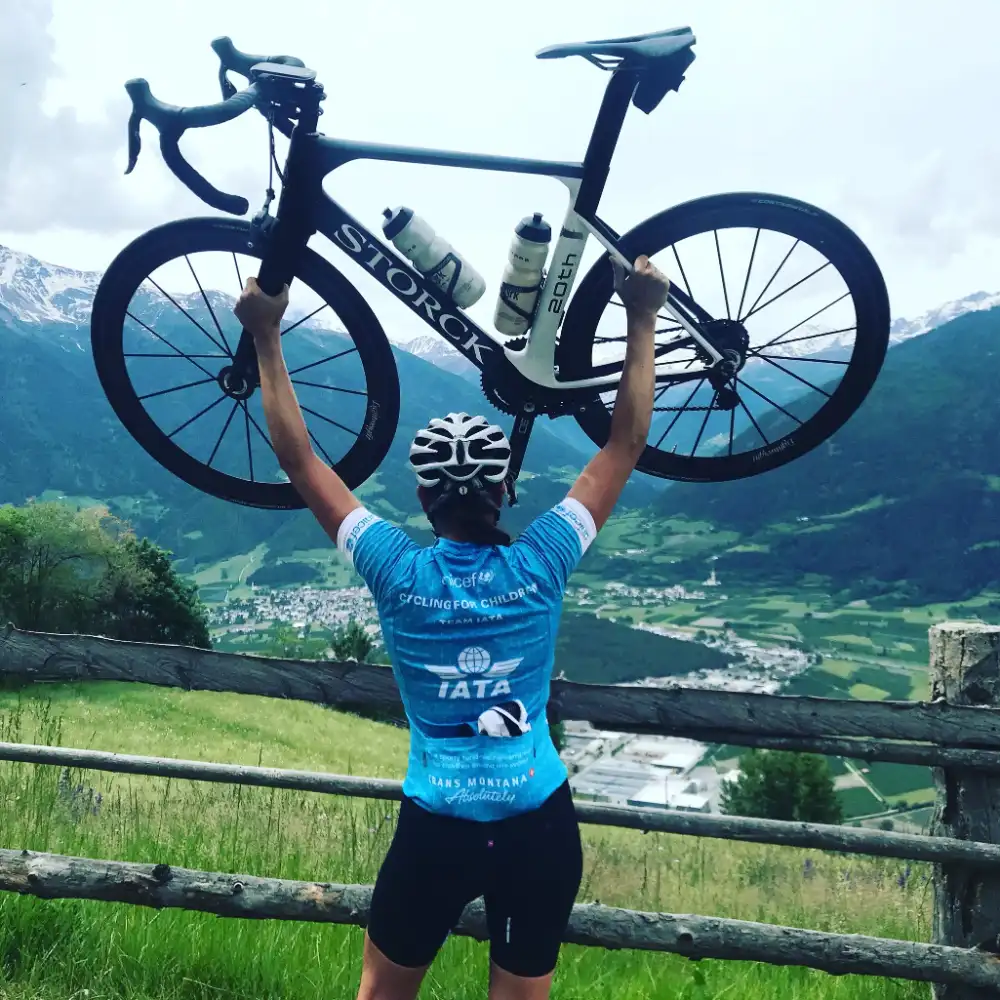
What are you waiting for?
Your next goal is already in the calendar.
I take the stress of training planning off your hands and make sure every session has a purpose – with variety, enjoyment and progress you can feel.
Book your free first call